

In today’s fast-paced digital landscape, where headlines pop up quicker than a cat meme on social media, understanding media ethics is more crucial than ever. It’s not just about covering the latest celebrity gossip: it’s about ensuring that the information being shared is accurate, responsible, and fair. Who knew that striking a balance between sensationalism and integrity would become a full-time job? Yet, here we are, wrestling with ethical dilemmas that would make even the most seasoned journalist break a sweat. In this text, we’ll dive deep into what media ethics entail, where they originated, and how they continue to evolve. Buckle up.
Understanding Media Ethics
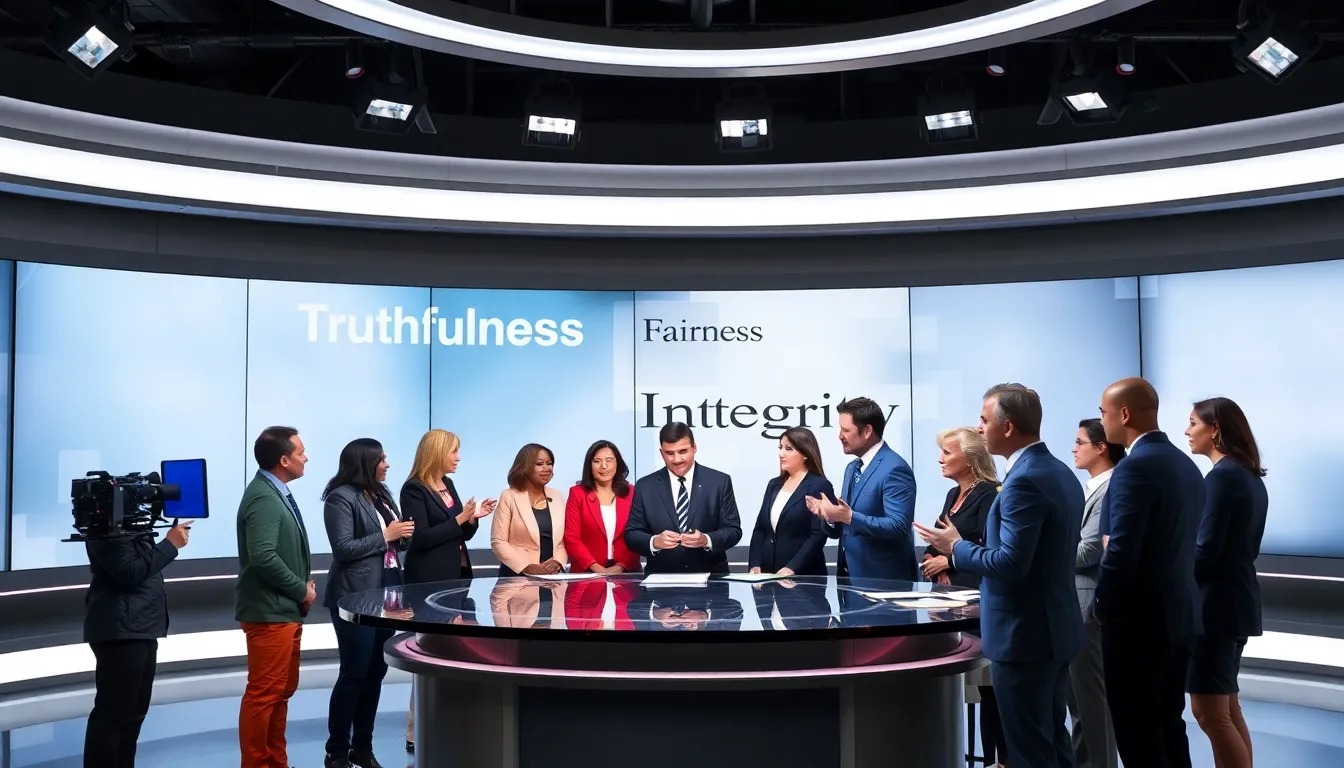
Media ethics refers to the principles and standards that govern the conduct of individuals and organizations in the media sphere. These guidelines are essential in ensuring that journalists and media professionals present news stories in a fair and accurate manner. With the rapid changes in media technology and communication, these ethics have become more complex than ever. They center around the ideas of truthfulness, fairness, and integrity, guiding the actions of journalists, editors, and news organizations.
At its essence, media ethics is about the moral responsibilities that come alongside reporting and disseminating information. It encompasses various components such as sourcing, representation, conflicts of interest, and handling sensitive issues. Essentially, media ethics serve as a compass for professionals, helping them make tough decisions in an industry where the stakes can be incredibly high.
Historical Context of Media Ethics
The roots of media ethics can be traced back to the inception of journalism itself. In the early days of print media, journalists operated with rudimentary ethical standards, often dictated by their individual morals and societal expectations. As journalism evolved, so too did the need for a cohesive set of ethical guidelines.
The establishment of journalism associations, such as the American Society of News Editors in 1922, marked the beginning of formalized media ethics in America. These organizations sought to promote ethical journalism practices through codes of conduct, reinforcing the necessity of reporting accurately and responsibly. Over time, these guidelines adapted to address emerging issues, such as the impact of commercial pressure and the intrusion of privacy.
The digital age propelled these ethics into the spotlight, bringing new challenges. The rise of social media and citizen journalism blurred the lines between professional reporting and personal opinion. This transformation necessitated a reevaluation of media ethics to accommodate a plethora of platforms and dissemination methods.
Core Principles of Media Ethics
When discussing media ethics, several core principles consistently emerge:
- Truthfulness: Every media professional should strive to report the truth. This principle emphasizes the necessity of thorough fact-checking and substantiating claims.
- Fairness: The media must ensure that all sides of a story are represented. This involves giving voice to minority perspectives and avoiding bias.
- Accountability: Media organizations should hold themselves responsible for their reporting. This means correcting errors promptly and transparently.
- Independence: Journalists must remain independent and not allow outside influences, such as advertisers, to dictate their coverage.
- Respect for Privacy: Individuals’ rights to privacy must be respected, especially in sensitive matters.
These principles serve as the foundation for ethical reporting, laying the groundwork for trust between the media and the public.
Challenges in Media Ethics Today
Even though the established principles, media ethics faces numerous challenges today. One major issue is the phenomenon of Fake News, where false information spreads rapidly across social media platforms, undermining public trust. Journalists are often pressured to publish stories quickly, sometimes at the expense of accuracy, creating a recipe for disaster.
Also, the advent of algorithms in news dissemination has led to concerns about editorial independence. When social media platforms dictate what stories gain visibility, it raises questions about freedom of the press and the potential for censorship.
Also, the proliferation of clickbait headlines pressures journalists to sensationalize stories, which can distort the truth. This ‘race for clicks’ may prioritize engagement over ethical journalism, complicating efforts to uphold high moral standards.
The Role of Media Professionals in Upholding Ethics
Media professionals play a crucial role in establishing and maintaining ethical standards within their organizations. Journalists, editors, and producers must prioritize ethical practices to foster credibility and trust. It starts with education: many journalism schools now emphasize ethics training, ensuring that future reporters are well-equipped to navigate challenging situations.
On the ground, media professionals must advocate for ethical practices within their newsrooms. This involves standing up against censorship and resisting external pressures that could compromise their integrity. Also, transparency with audiences can be a powerful tool in promoting accountability. When journalists openly discuss their decision-making processes and acknowledge mistakes, they foster a sense of trust with the public.
Case Studies in Media Ethics
Examining real-world examples can shed light on the intricacies of media ethics. The 2003 reporting on the Iraq War offers a notable case. Many journalists faced immense pressure to report on government claims about weapons of mass destruction. Unfortunately, several news organizations failed to scrutinize this information rigorously, resulting in widespread misinformation.
Another example is the coverage of celebrity scandals. Sensationalized stories often dominate tabloids, leading to ethical concerns about privacy invasion. How far is too far when it comes to reporting on individuals’ lives? This raises ethical dilemmas that media professionals must navigate carefully, balancing public interest and respect for personal boundaries.
In contrast, the 2018 coverage of the Parkland shooting highlighted the importance of ethical journalism. Many outlets adhered to principles of sensitivity and respect, showing restraint in reporting that resulted in constructive coverage.
Future of Media Ethics
Looking ahead, the future of media ethics will likely be shaped by ongoing technological advancements and societal shifts. With the rise of artificial intelligence and machine learning in news reporting, ethical dilemmas around accuracy and bias will intensify. Media organizations will need to develop new frameworks to ensure accountability in automated reporting processes.
Also, the fight against misinformation will continue to be a critical area of focus. Media professionals must evolve their strategies to combat fake news while remaining committed to their foundational ethical principles. As consumers become more discerning, transparency in journalism will become crucial. Audiences are likely to demand higher accountability from news sources, pushing media organizations to prioritize ethical standards.